
A Tale of Two Economies
Published in The Scotsman, 6 June 2026
Two economies vie for Scotland's future. One is the economy we know well: linear, extractive, predicated on the burning of fossil fuels and the depletion of soils, biodiversity and fresh water. It is the economy that has carried us, with its thirst for quarterly returns and its glossy GDP figures, into climate meltdown and biodiversity collapse. It is increasingly clearly the road to ruin.
The other economy is one we are only beginning to glimpse, but which has been quietly assembling itself in pockets of practice across Scotland and beyond. It is circular, nature-based, and predicated on the hope-inspiring notion that you can grow human prosperity by restoring the living systems on which it depends.
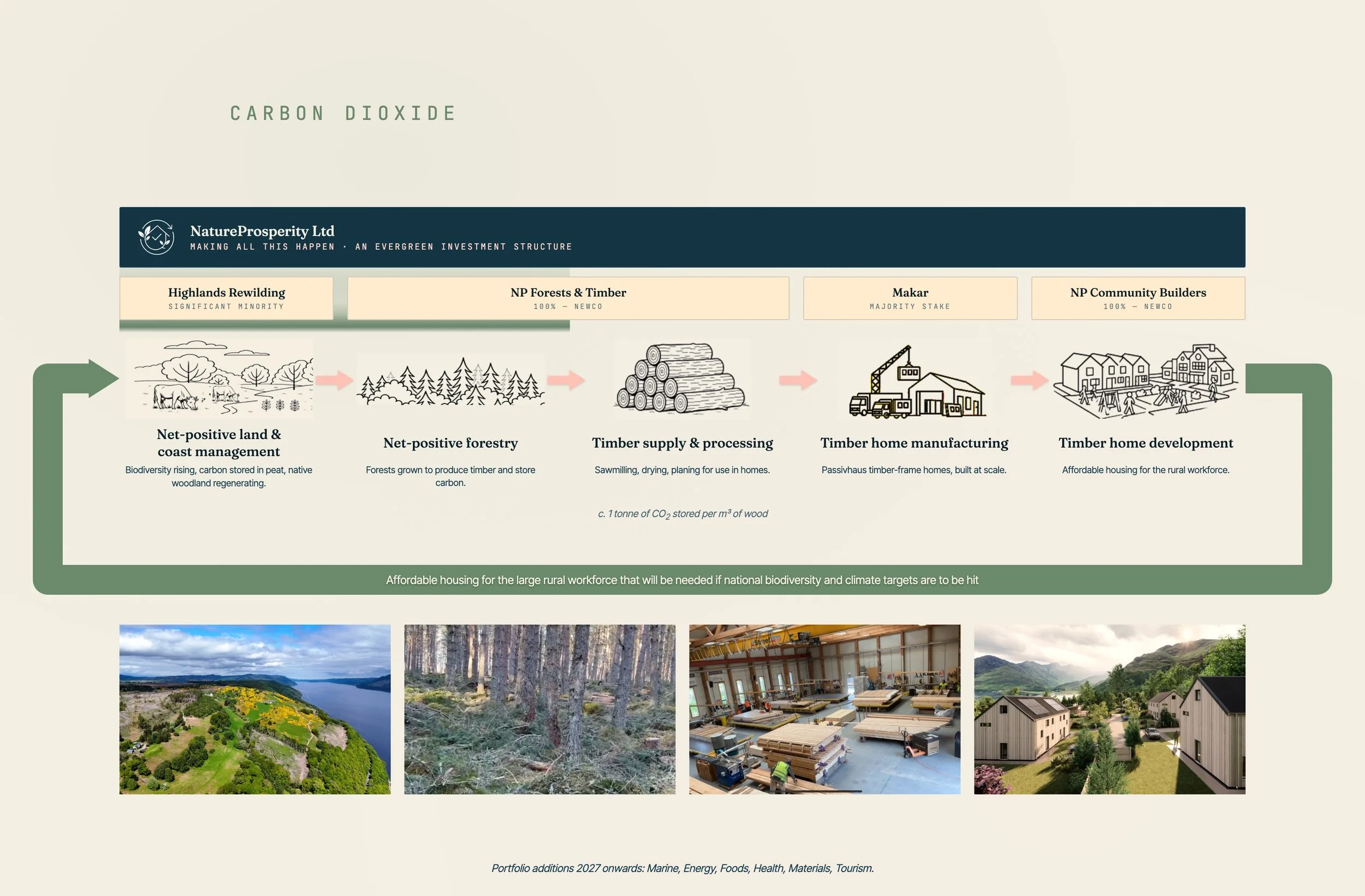
I call the driving mechanism of this economy the nature prosperity pump.
The pump starts like this. Scottish vegetation sucks carbon dioxide from the atmosphere. This already happens, obviously – we just need to do a lot more of it. Then that part of the vegetation that can be used for sustainable forestry is harvested to provide timber. This too already happens – but again we need to do more. The UK cannot remain the second biggest importer of timber after China.
The Nature Prosperity Pump
Next the timber is used to manufacture affordable wooden housing. Not just timber frame housing – housing entirely made of wood. This wooden housing is deployed at scale.
As we do this we begin defusing three existential threats to a healthy economy. First the sucking down into ecosystems of carbon dioxide, the main greenhouse gas, helps abate climate meltdown. The timber housing locks carbon dioxide away further: around a tonne for every cubic metre of wood in a wooden building. It saves still further carbon, because if the houses are of so-called Passivhaus standard little or no fossil fuel needs to be burned to heat them. And the timber to make them doesn't have to be transported far, further saving fossil-fuel emissions.
Second, the timber housing can be made affordably, helping to dismantle our dire national housing emergency. We cannot do that by expanding house numbers using the carbon-intensive materials currently used by the construction industry.
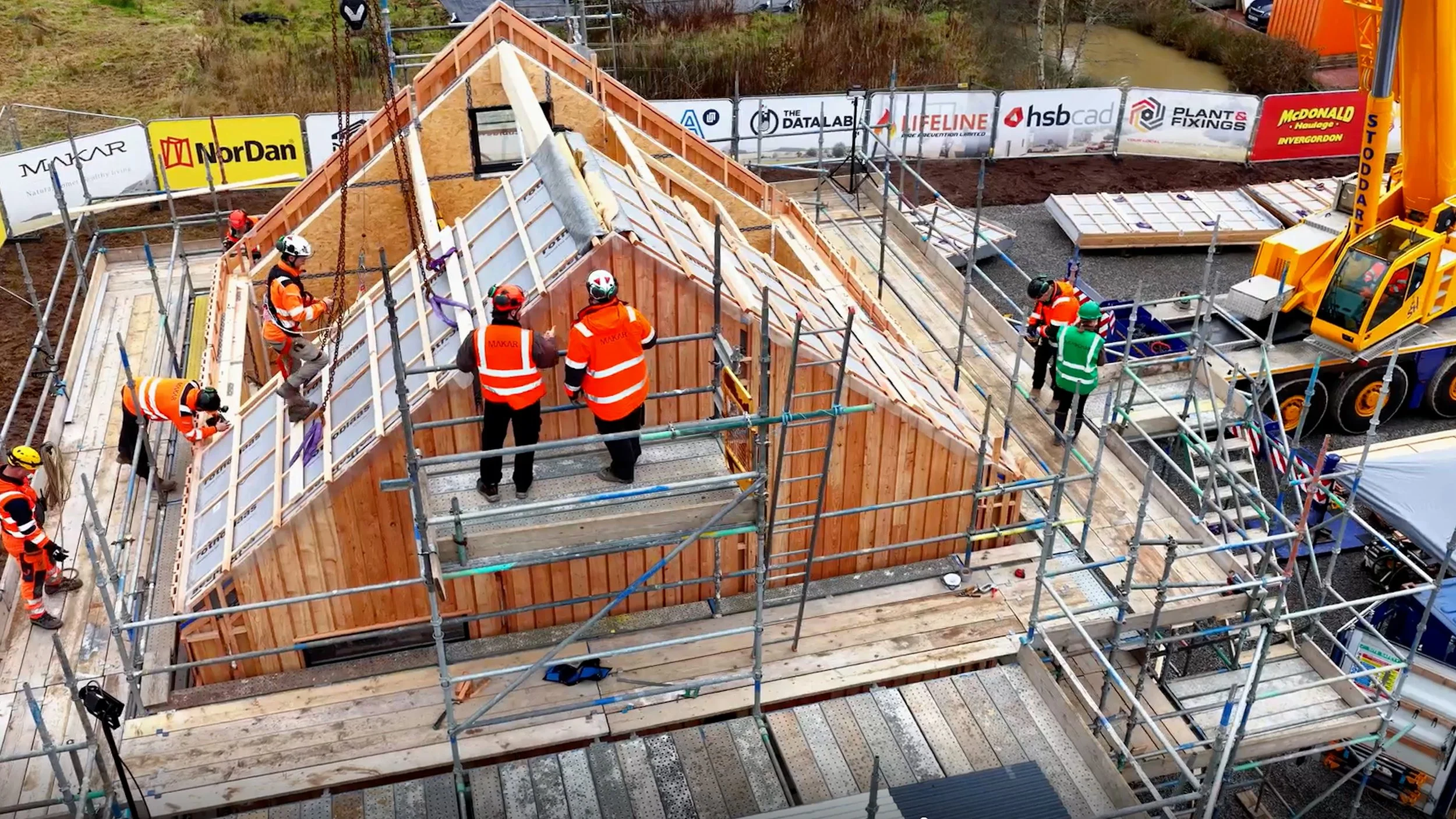
Assembly of MAKAR prototype home, Inverness
Third, crucially – and this is how the pump closes – deploying the timber housing at scale provides homes for the workforce needed if nature recovery is to be undertaken at the landscape scale needed to hit national targets on reversing biodiversity collapse and cutting climate risk. This requires the full panoply of nature recovery: in woods and forestland, peatland, pastures, soils, rivers and all the offshore environments where so much carbon can be stored – in kelp, seagrass, and salt marsh in particular.
The prosperity element of the pump springs from the many social and economic benefits that spin off the process. These start with jobs. A nature-based economy is job-rich, and most of the jobs are outdoors. If we must lose jobs to AI in offices, then let's win them back in nature. The more so because of a second big benefit – mental health. The evidence that immersion in nature helps mental wellbeing is substantial and growing.
Employment-related benefits accrue rapidly. Skills training opportunities are legion: for joiners, self-builders, prisoners given a new purpose in rehabilitation, the list is long.
Then there are the opportunities for food self-sufficiency, in a rural economy where there are sufficient affordable homes to regenerate aging communities. Massive local vegetable and fruit production and processing operations become possible. Getting venison into the food chain becomes much easier where local larders can be stocked, and staffed. And with that the threat Scotland's out-of-control deer population poses to young trees diminished, increasing the scope for rapid forestland growth, strengthening the nature prosperity pump.
And so the virtuous circle goes on. I count more than 60 social and economic benefits of the nature prosperity pump.
When I emigrated to Scotland six years ago, I invested all the money I made by founding a successful solar energy company in two enterprises: Highlands Rewilding, a nature-recovery company of my own creation, and MAKAR, a timber housing manufacturer based in Inverness. I was in effect trying to help show the way to the nature prosperity pump. Now, with the creation of my latest entrepreneurial enterprise, branded NatureProsperity Ltd, I will be trying to take that mission to the next level.
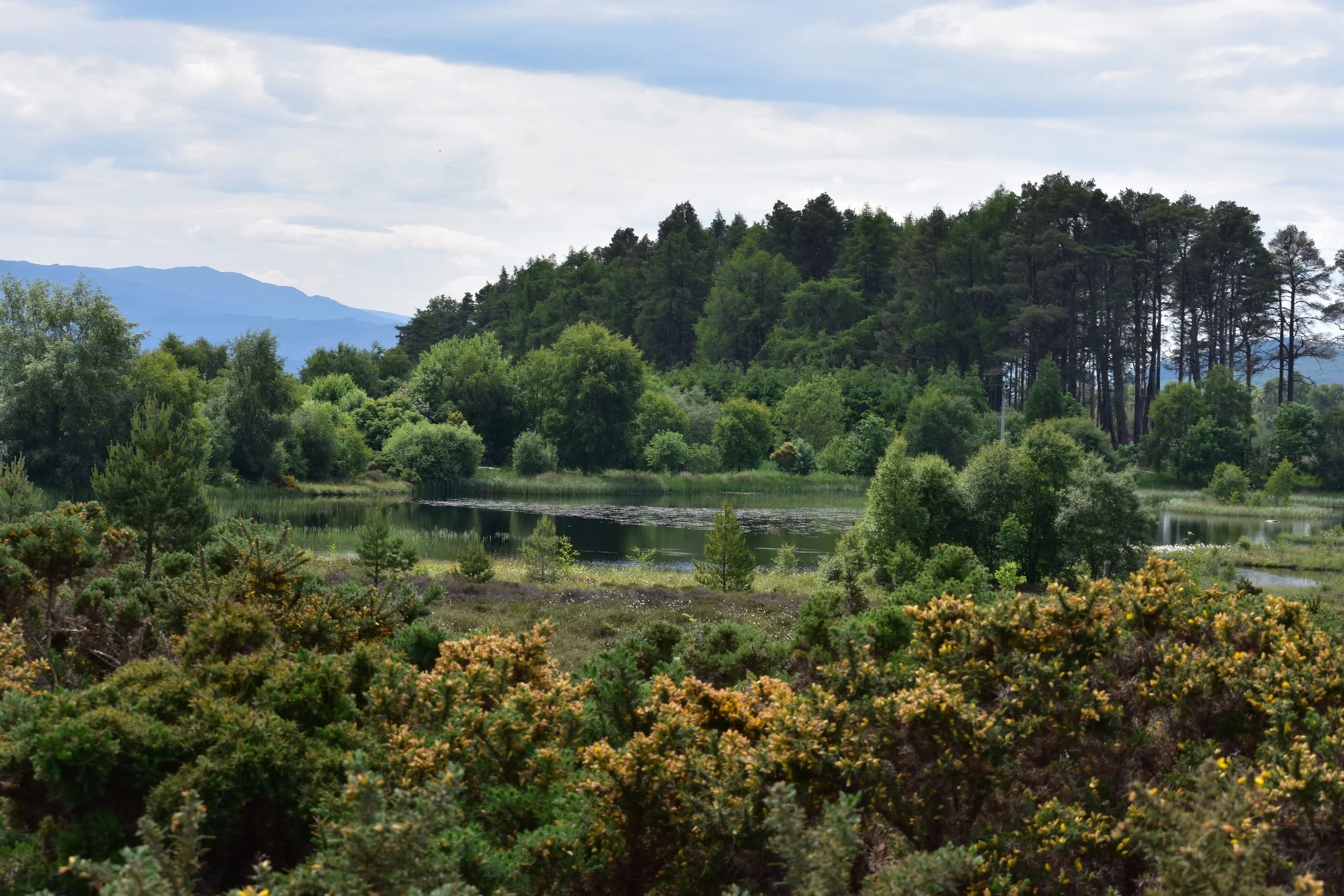
Lochan, South Bunlot
The South Bunloit estate, where I live, will become the NatureProsperity Resilience Reserve. It will be a test bed and exemplar for the nature prosperity pump. Highlands Rewilding is already managing the estate ready for the monetisation of natural capital: carbon sequestered and biodiversity uplifted. We are creating new woodland, restoring peatland, and growing a food forest. MAKAR will manufacture a small hamlet of timber houses as homes for estate workers, and for use by local-community joint ventures such as those we already have underway in mindfulness and vegetable growing.
If NatureProsperity is successful, there will be other Resilience Reserves.
Everything on a Resilience Reserve will be monitored and measured aiming to optimise social good, and in anticipation of the day that social value itself becomes monetisable. Is it unimaginable, in an economy under existential threat from status quo practices, that the corporate world might be required by government to buy social credits, the same way it is required to buy carbon credits? I think not. Indeed, progressive companies might want to jump voluntarily in that direction, ahead of being pushed, so as to impress their stakeholders.
There is another rationale for transitioning to a nature-based circular economy. It is becoming increasingly clear that the linear extractive economy is imperilling social cohesion. Think of how oil dependency is driving world disorder today. Where social cohesion is imperilled, the Far Right rises, and the prospect of full fascism with them. A nature-based, resilient, economy foments social cohesion. It protects democracy. It reduces the prospect of war, international or civil.
Scotland is perfectly positioned to lead the way.
This article was written by Jeremy Leggett, the self-professed serial social entrepreneur and Scottish immigrant who won the 2025 Blue Planet Prize.

Dr. Leggett receiving The Blue Planet prize from Chairman Shimamura